

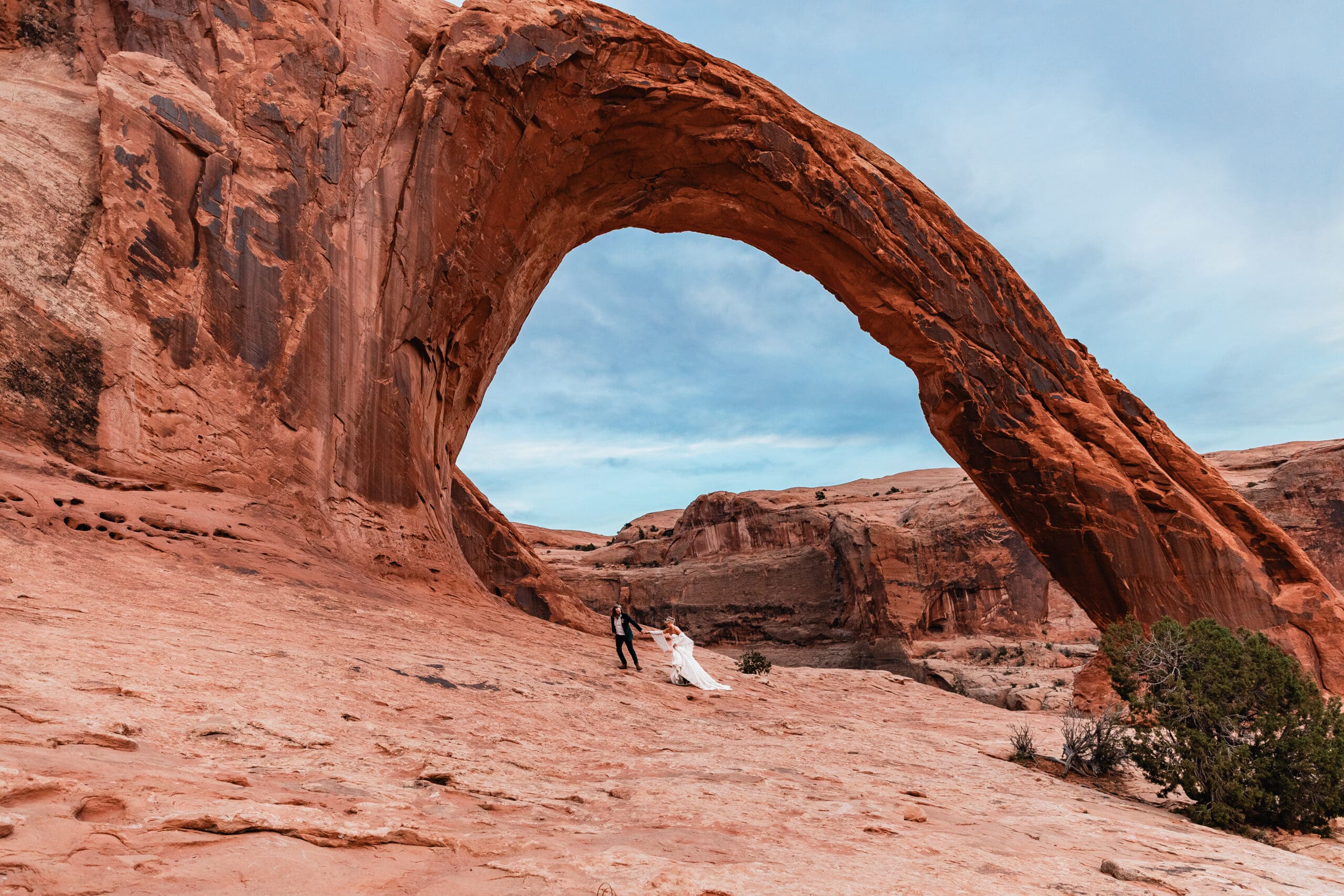
Before you read on I want you to pause. When you decided to elope, what did you feel in that moment? What do you feel? Excitement? Relief? Freedom? That little weight lifting off your shoulders because suddenly, you get to plan a wedding that actually reflects you? That’s real. That’s exactly what this is about.
And then… the questions probably started:
- “Oh… so it’s just the two of you?”
- “What about us?”
- “So you’re not doing a big celebration?”
- “Are you just going to the courthouse?”
- “At least you’ll save money”
If that sounds familiar, you’re not imagining it. There’s this quiet narrative that elopements are the “quick and cheap” option to a traditional wedding. Like if you’re not hosting a big event or spending $30–$40K, your wedding somehow shrinks with it.
And I just… don’t agree.
Not every elopement has to be a five-minute courthouse ceremony. And if that feels like you? Truly I support it. I love courthouse weddings, but that’s not the only version of what this can look like. Who decided that traditional weddings deserve months of thoughtful planning while elopements are expected to be quick and simple? Why shouldn’t your elopement be planned with the same care and thought as a traditional wedding? At the end of the day, both are about the same thing: two people choosing each other, the years that led up to it, and the life you’re building from here.
Here’s the honest truth: Elopements aren’t the stripped-down version of a wedding. They have their own rhythm, their own logistics, and they deserve the same level of care and planning as any traditional wedding day.
- Yes, elopements can cost less that doesn’t mean you should treat your elopement like a fast food version of a wedding day. It does mean cutting corners. It means refocusing spending where it counts.
- Yes, elopements are smaller. But small doesn’t mean winging it. Elopements still take planning, permits, location scouting, and a guest list that truly reflects your day.
- Yes, elopements are less formal. But they still demand respect. Every choice is purposeful, from the moments to the experience itse
So consider this your sign to leave the outdated narrative about elopements behind and choose something more honest. Step fully into a wedding day that actually reflects your life. One built around real experiences, real connection, and the relationship you’ve built together. Your path. Your priorities. Not everyone else’s expectations.
Let’s unpack.
- Elopements Can Cost Less But They Aren’t Cheap Weddings
- Elopements Aren’t the Easy Way Out
- Eloping Isn’t Running Away
- The Wedding Noise Doesn’t Just Disappear
- Your Wedding Day Can Feel Like an Adventure
- Why the Stigma Exists And Why It Isn’t Yours to Carry
- Navigating Family & Friends Without Losing Yourself
- Let’s Quiet the Noise

Elopements Can Cost Less But They Are Not “Cheap Weddings”
Yes, elopements in the U.S. can cost less than the average traditional wedding. But less expensive does not mean cheap. And it definitely doesn’t mean less authenticity.
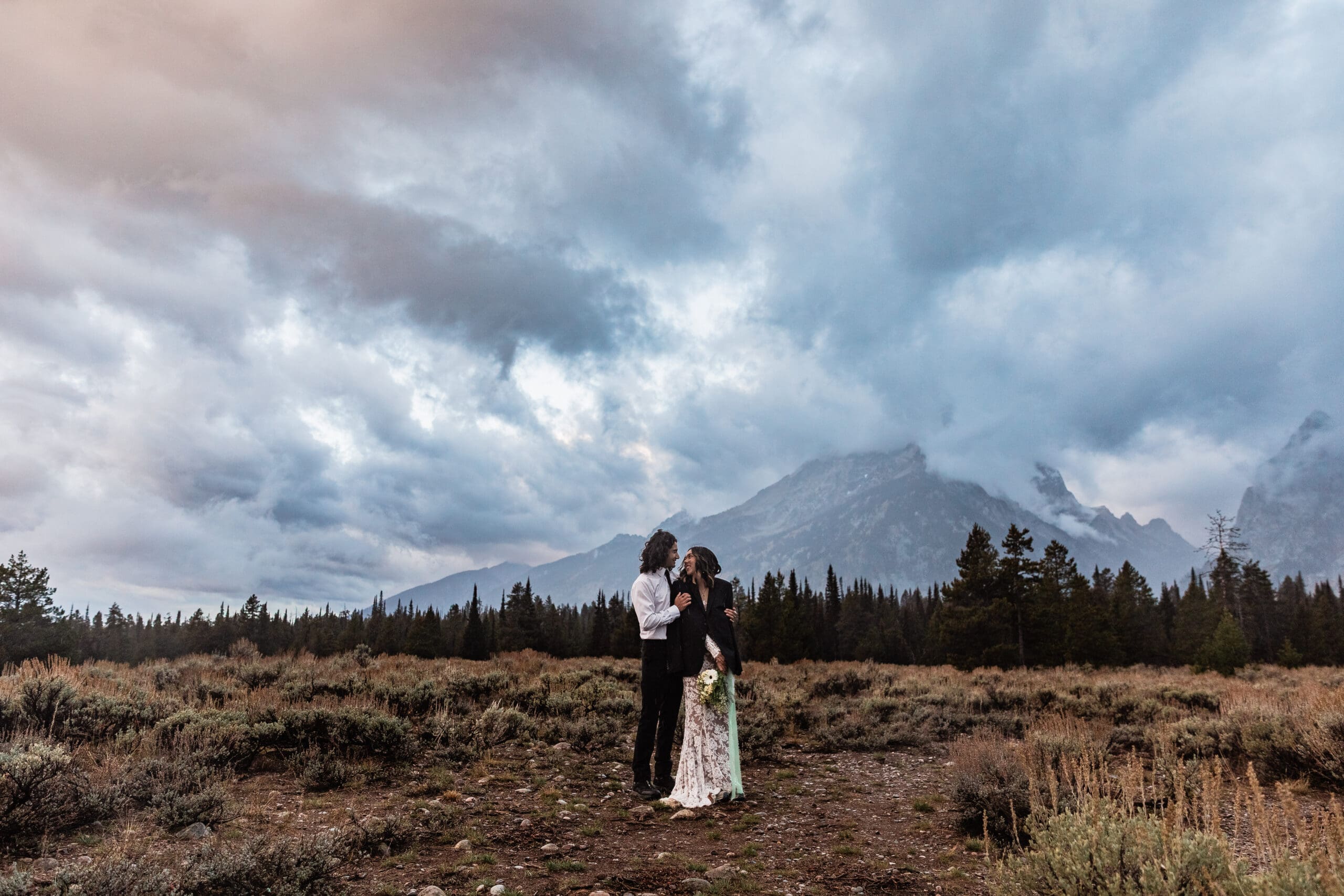
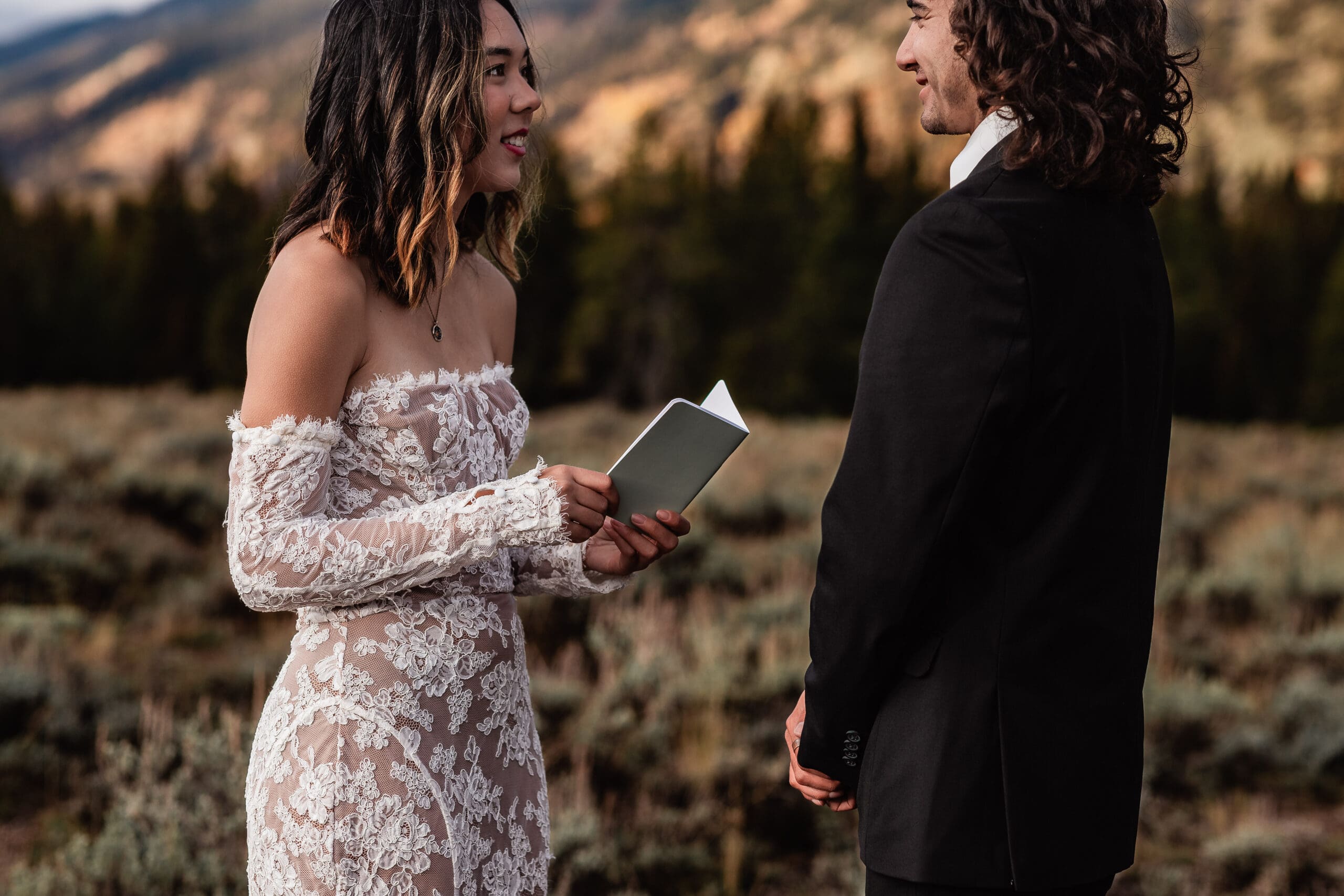
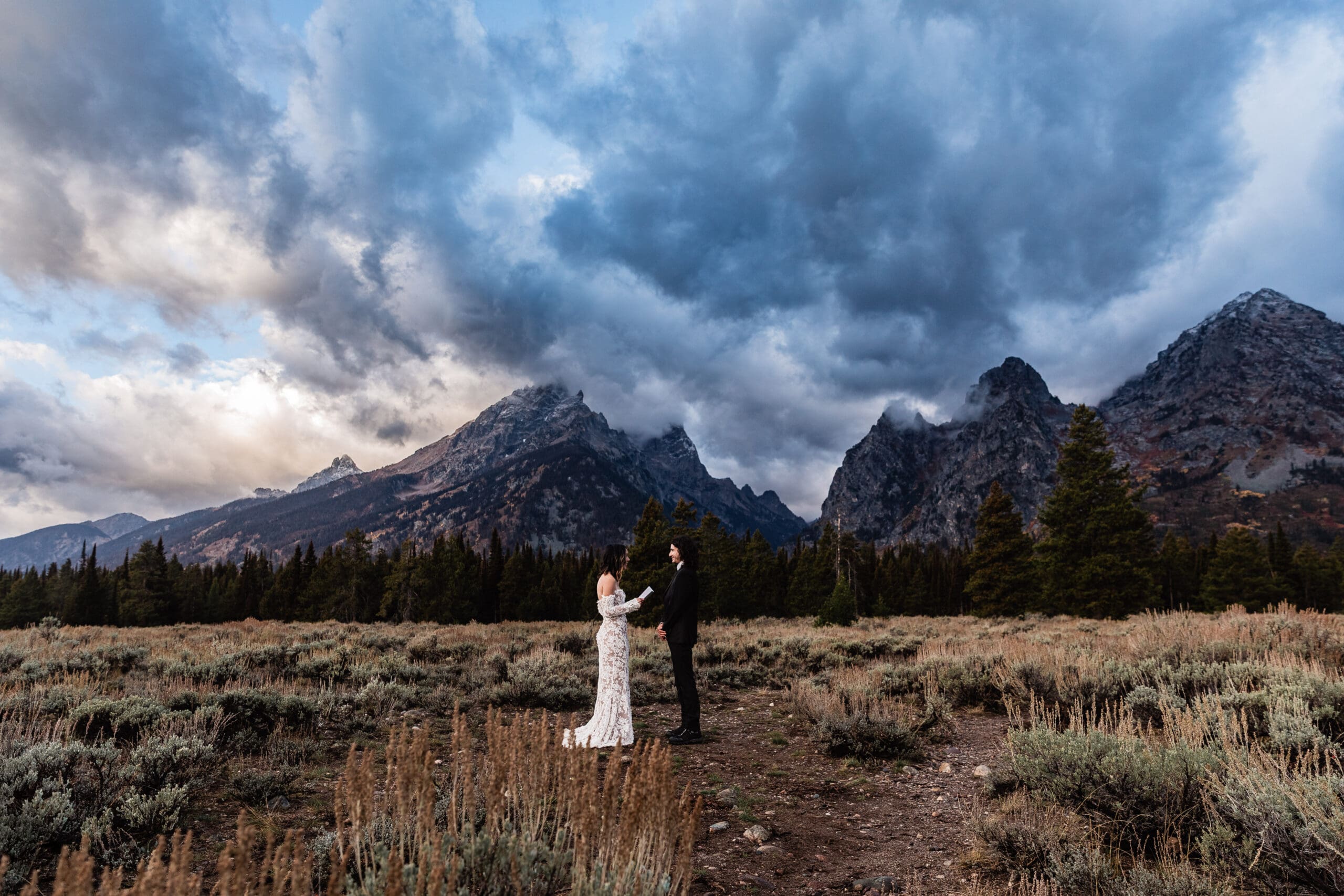
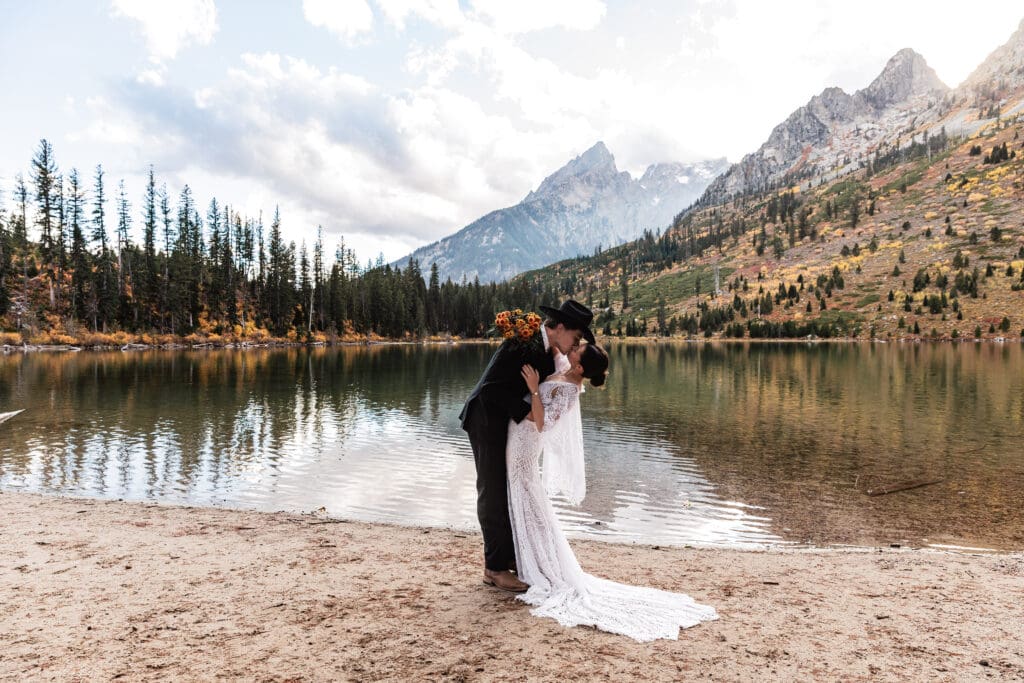
The average U.S. wedding often falls between $30,000–$40,000+. You could plan an incredible, fully immersive elopement in places like Grand Teton National Park, Zion National Park, or Arches National Park and not even touch that number.
But here’s the shift:
Elopements don’t remove the investment. They refocus it.
Instead of investing in:
- Chair covers and linens
- Large catering minimums
- Venue rental fees
- Guest favors for people you barely had time to talk to or barely even know
- Décor designed to fill a large reception space and then having to decide what to do with it all afterwards.
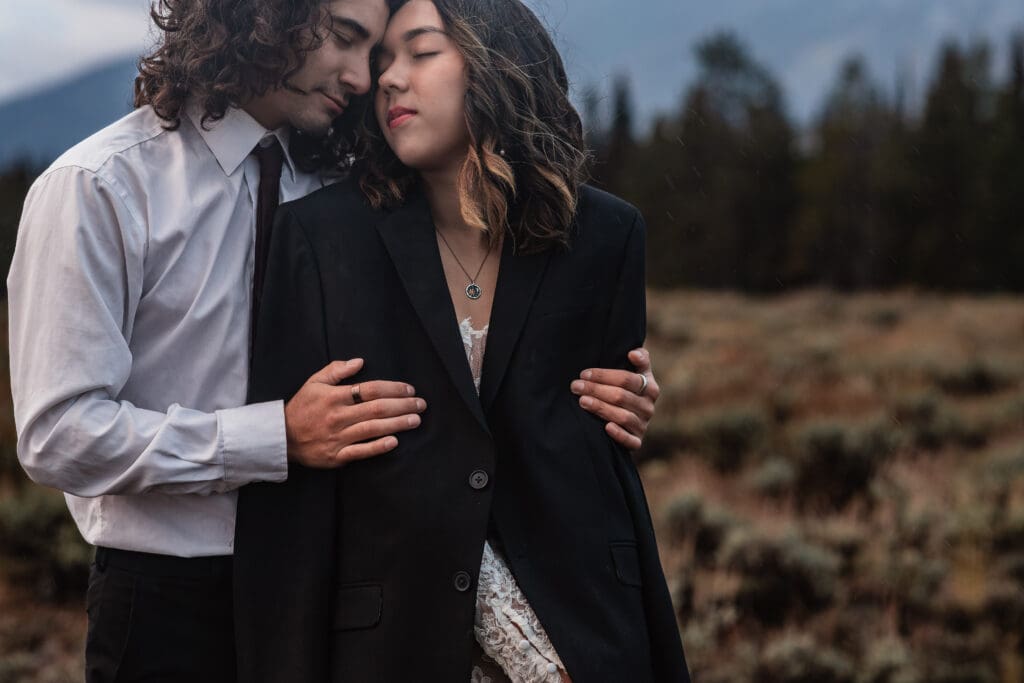
You’re often investing in:
- A location that actually means something to you
- Special use permits and park access
- Travel and lodging for an immersive experience
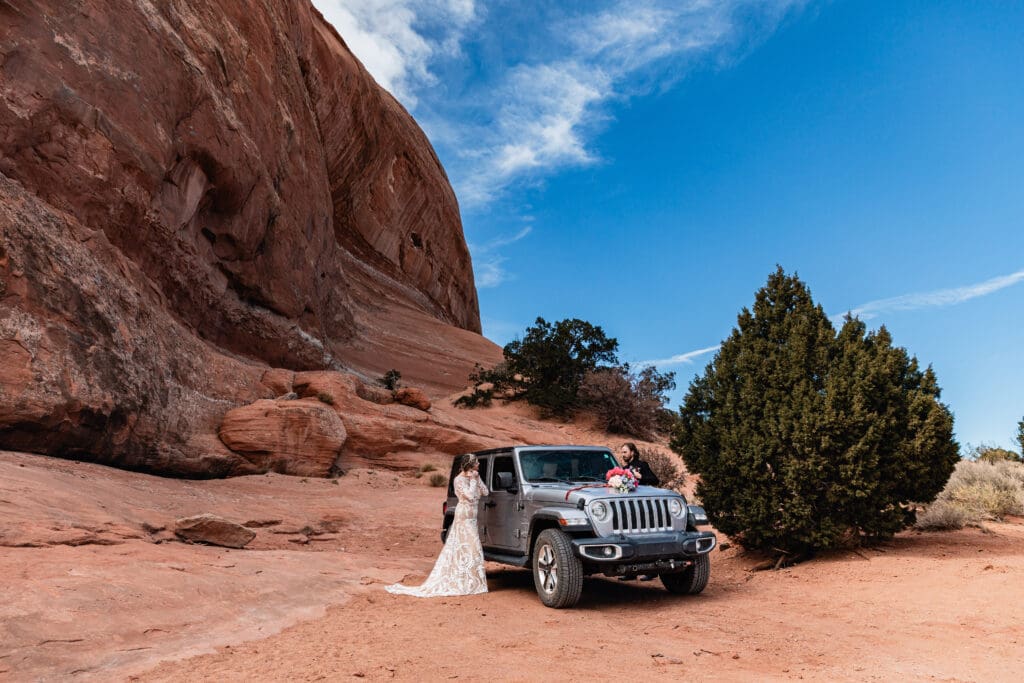
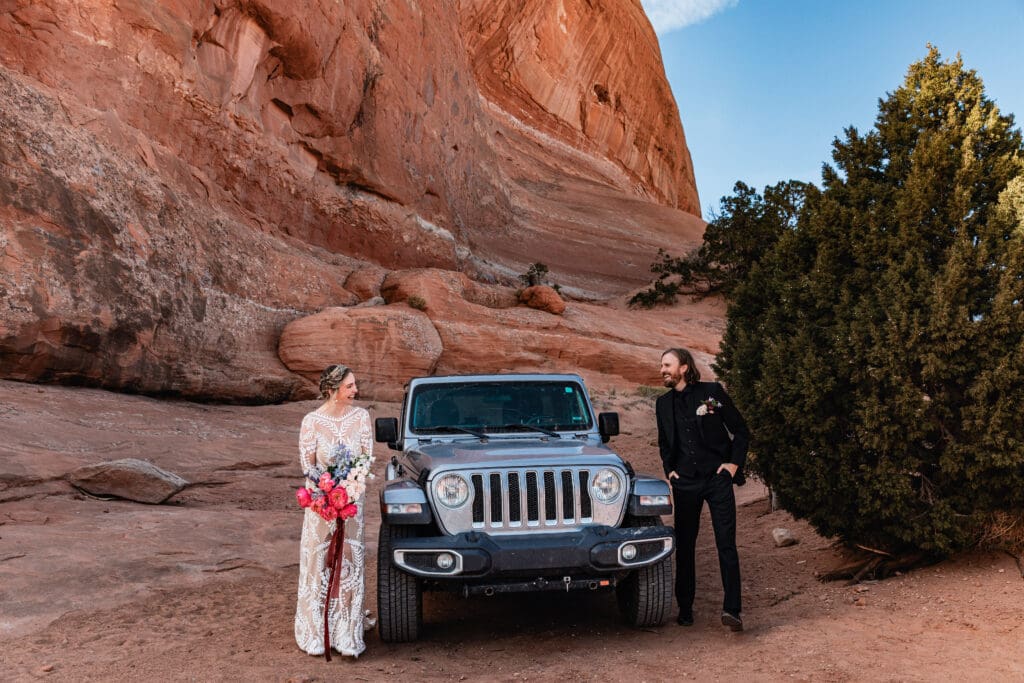
- Activities that you love to do like hiking, camping, Jeeping, skydiving, scenic helicopter tours
- An experienced elopement photographer who knows the terrain, crowd flow, light, permit process, locations, places to eat, stay, etc.
- Hair and makeup artists willing to hike or wake up before sunrise
- Florals designed to survive wind, elevation, and real weather
- A timeline built around weather, location, light, and what you want to do.
This isn’t just about saving money. It’s about deciding who your wedding day is actually for. Because this is the one day that is meant to center your relationship, the journey that brought you here, and the promises you’re making.
So I’ll ask it the controversial question:
Would you rather have a day designed for you or a day that’s supposed to be about you but designed around everyone else?
Elopements Aren’t the “Easy Way Out”
There’s this quiet assumption that eloping means you’re opting out. That you’re skipping the work.
That you’re just showing up somewhere pretty and hoping for the best.
That’s not what a meaningful and planned elopement look like.
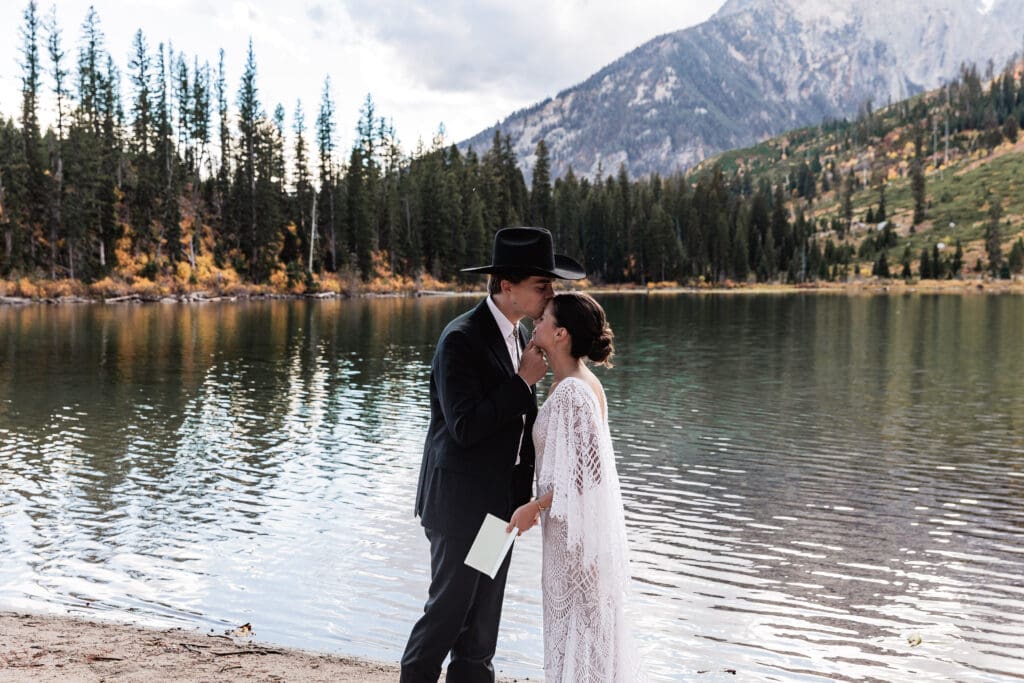
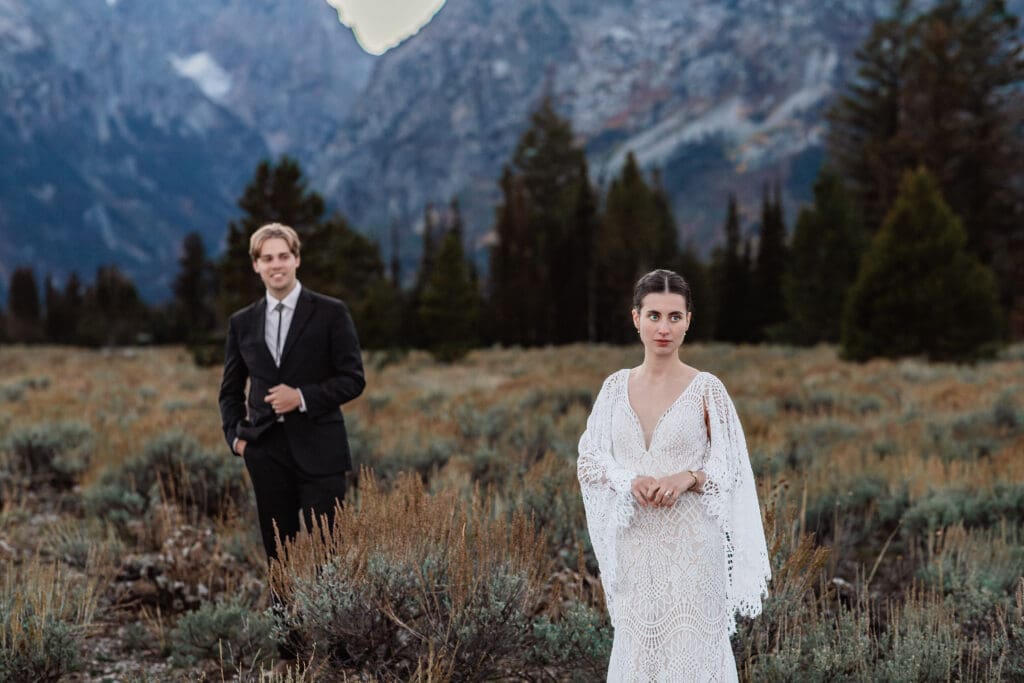
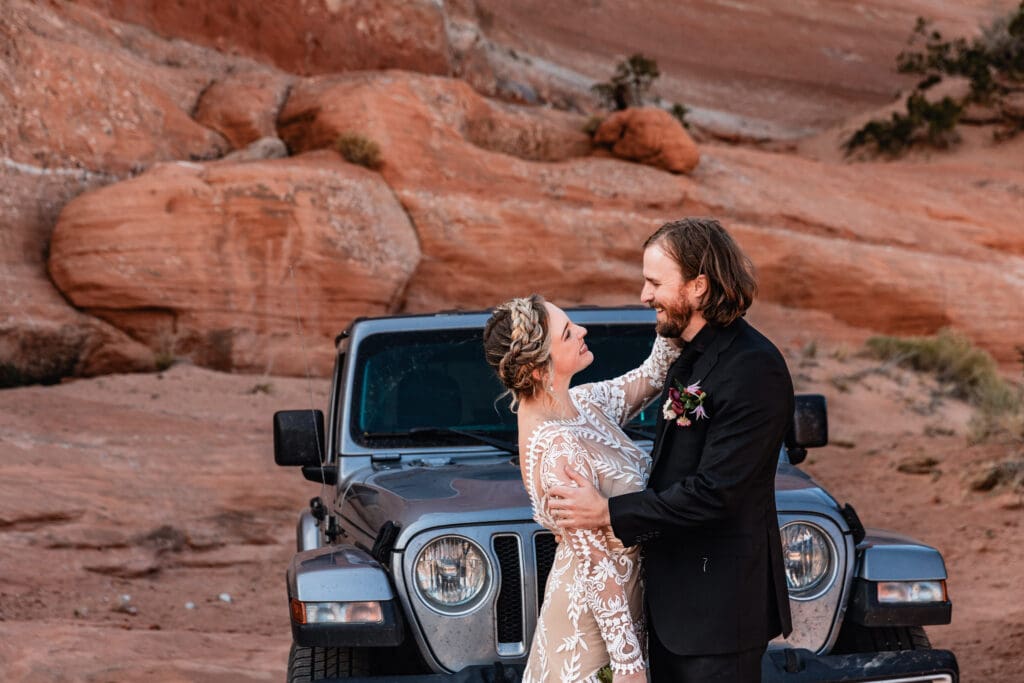
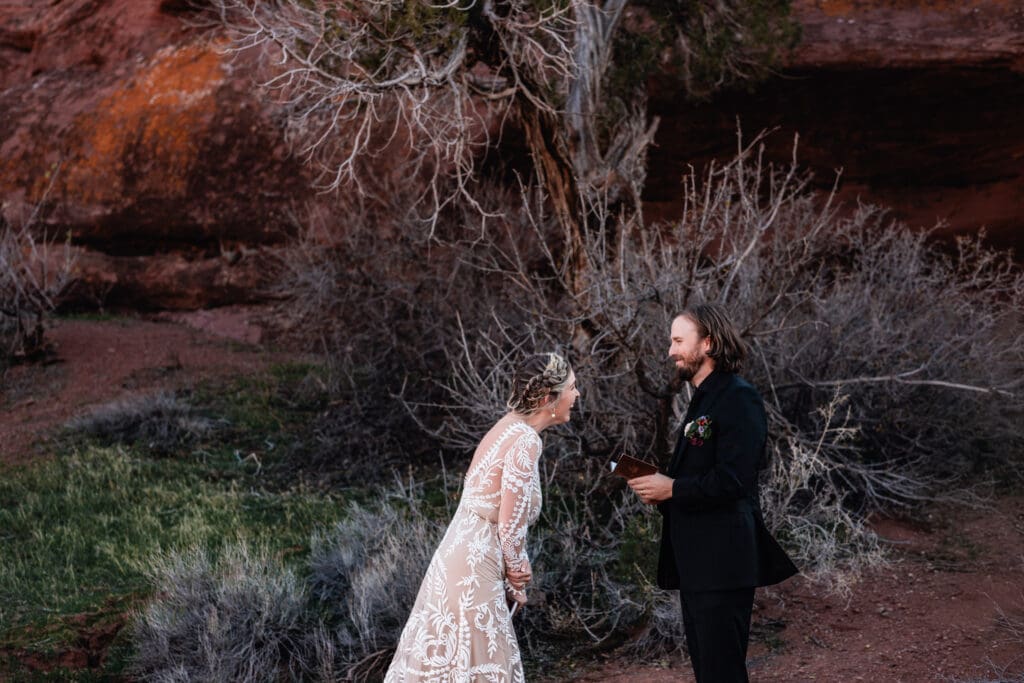
Whether you’re exchanging vows in a national park like Grand Teton National Park, on the cliffs near Zion National Park, in the red rock around Arches National Park, at a private Airbnb tucked into the desert, or on family land that holds meaning presence doesn’t happen by accident. It’s created. And it’s supported by thoughtful planning.
Here’s what that often looks like behind the scenes:
- Securing permits when required
- Understanding guest count guidelines and location restrictions
- Researching seasonal access and weather patterns
- Building a timeline around light instead of a reception schedule
- Planning travel, lodging, and transportation logistics
- Factoring in hiking time, elevation, or terrain
- Creating backup plans for storms or unexpected closures
- Following Leave No Trace principles to protect the land
- Coordinating vendors who are aligned with an experience-focused day
An elopement gives you freedom but that freedom still needs structure.
The reason you’re able to be fully in the moment, breathe deeply, and actually feel your vows? It’s because someone helped build a plan that supports that experience.
Planning an elopement isn’t about orchestrating a production. It’s about designing an environment where you can be present. It’s not less planning. It’s different planning. And it deserves the same level of respect and care as any traditional wedding and I would argue sometimes more.
Eloping Isn’t Running Away
Honestly, let’s retire that outdated phrase.
Eloping isn’t escaping.
It isn’t avoiding responsibility.
And it isn’t about shutting people out.
For many couples, it means something much simpler:
They want their wedding day to feel like them. Not filtered through expectations. Not designed around managing opinions. Not built as a performance.
They want to be present instead of hosting. They want to experience their vows instead of rushing through them. They want space to breathe.
And here’s something that often gets misunderstood: eloping means you can’t include family. Guess what? That’s not true
You can:
- Invite a small group of family or friends in person
- Have a parent read a letter privately before your ceremony
- Ask loved ones to record video messages you watch together
- Carry a handwritten note in your pocket
- Wear heirloom jewelry or fabric from a family gown
- Host a celebration dinner later
You get to decide what inclusion looks like.
There isn’t one formula that fits all and that’s what makes elopements so awesome. For many couples, eloping actually strengthens connection. It removes the pressure of managing 100+ people and creates space to be fully present with the few or with each other.
That’s not running away. That’s not less. That’s choosing meaning.
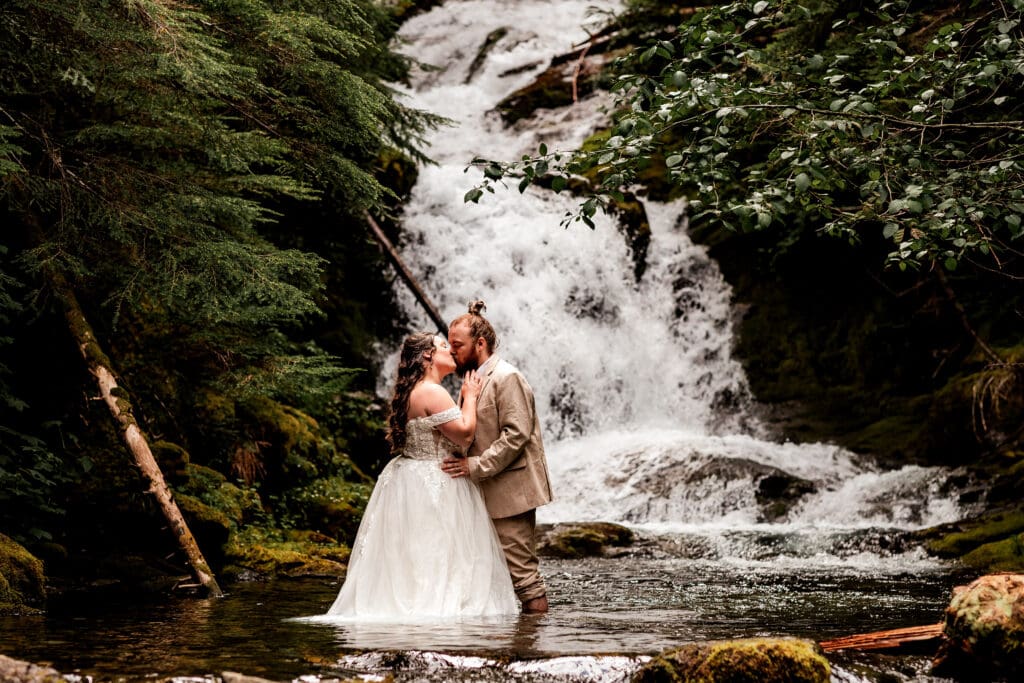
The Wedding Noise Doesn’t Just Disappear
Sometimes couples think that if they trade wedding noise for an elopement, the noise just… disappears.
No more opinions.
No more pressure.
No more outside voices.
But here’s the honest truth: Choosing to elope does quiet the wedding talk noise but it just changes the tone and the station.
Eloping can still come with emotional weight
- Family expectations
- Cultural traditions
- “But what about us?” conversations
- Guilt around doing something different
- Fear of disappointing people you love
- Worry that your day won’t be seen as “legitimate”
Choosing a quieter wedding doesn’t always mean the commentary is quiet. And that doesn’t mean you’re making the wrong decision. It just means you’re making an intentional one.
Because the reality is this: When you design a wedding day that truly centers your relationship, whether that’s just the two of you at sunrise or a small group gathered in a place like Grand Teton National Park, you are going against decades of conditioning about what a wedding is “supposed” to look like.
That takes courage.
So if you’re sitting there wondering whether your elopement will be taken seriously, or if people will think you’re running away, hear this clearly:
Your marriage is not validated by your guest count.
Your commitment is not measured by how many people witness it.
And your wedding day does not have to be loud to be significant.
You are allowed to design a day that feels aligned.
You are allowed to protect your peace.
You are allowed to choose mountains over a microphone or an Airbnb dinner over a ballroom reception.
And you do not owe anyone a spectacle to prove your love.
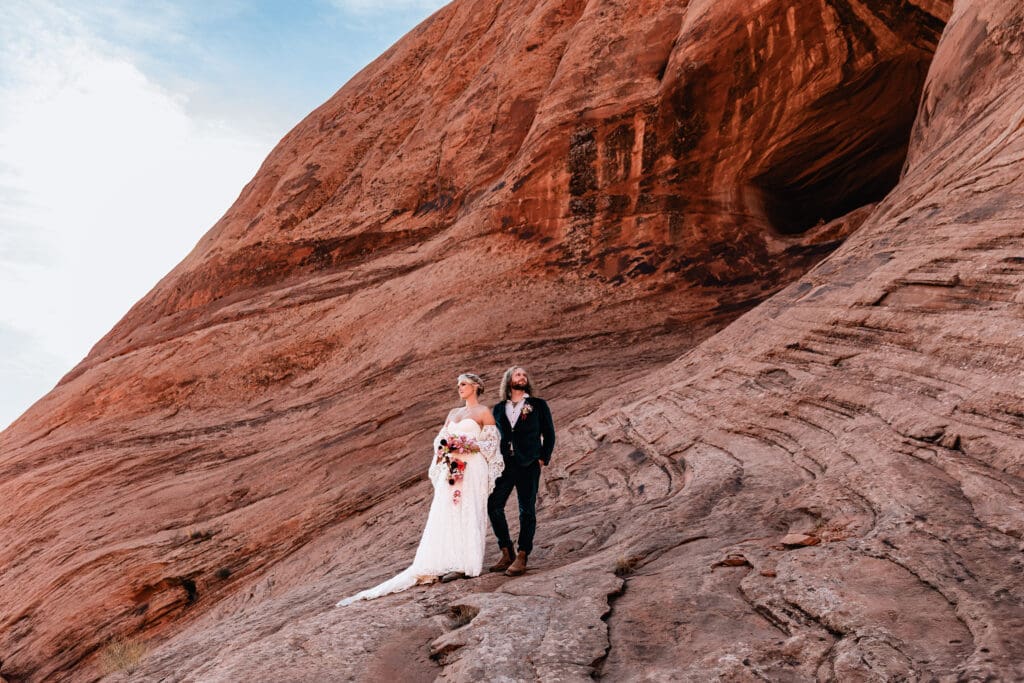
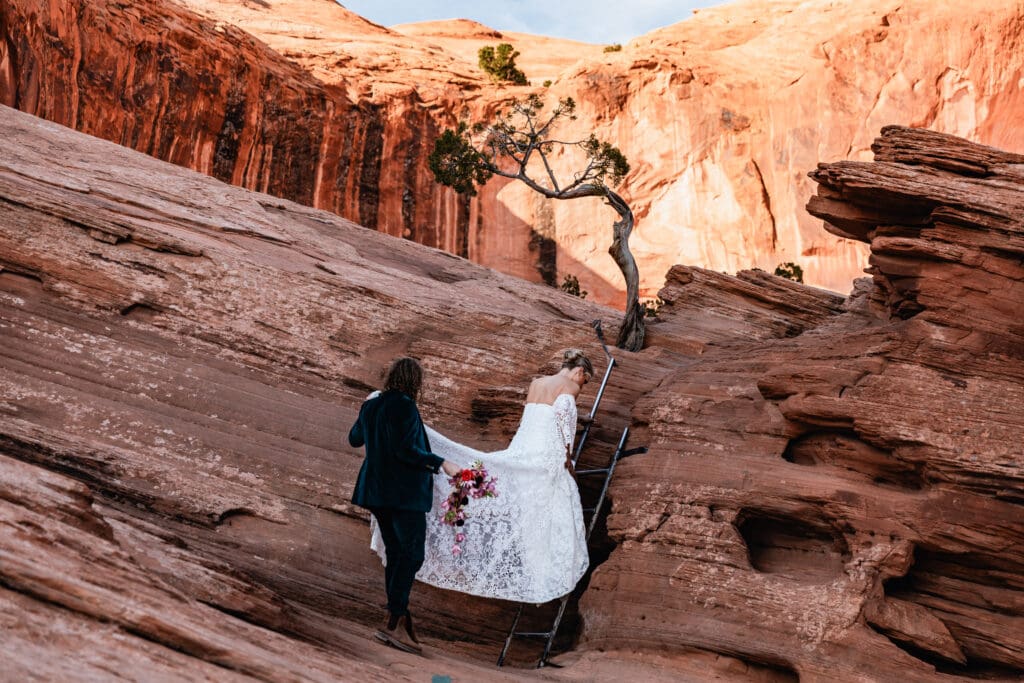
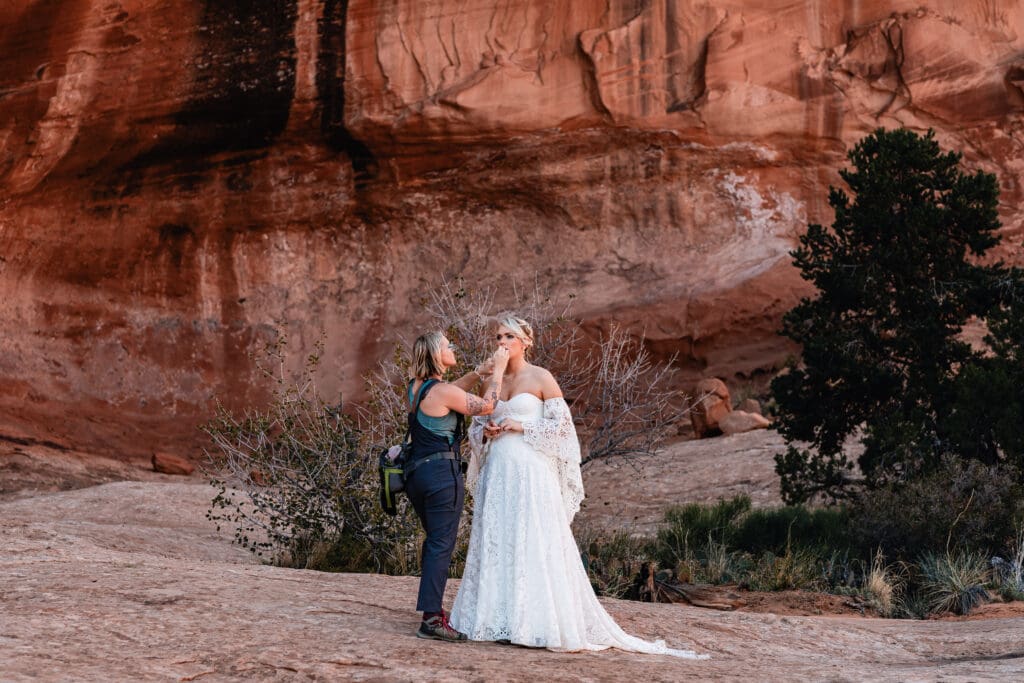
Your Wedding Day Can Feel Like an Adventure
When you strip away the pressure to perform, something really beautiful happens.
You get to ask:
What would we actually love to do?
Maybe that’s:
- Hiking into the mountains at sunrise
- Flying over canyon landscapes in a helicopter
- Saying your vows, then skydiving because why not
- Horseback riding through desert terrain
- Reading handwritten letters from your parents
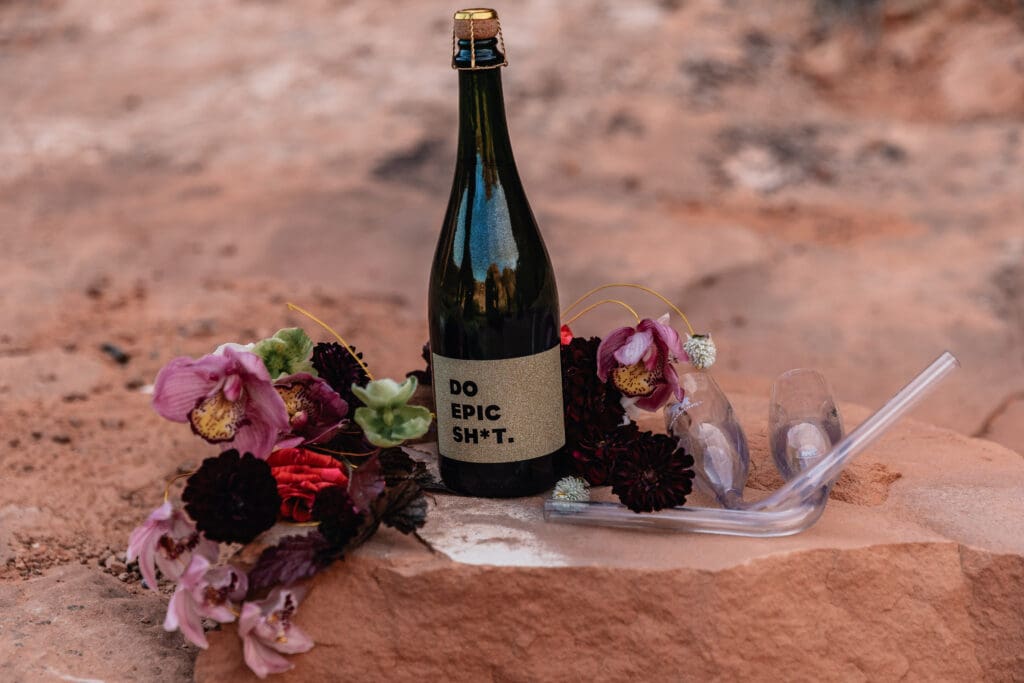
- Popping champagne on a sandstone ridge
- Ending the night in wedding clothes with burgers, fries, and cold beer
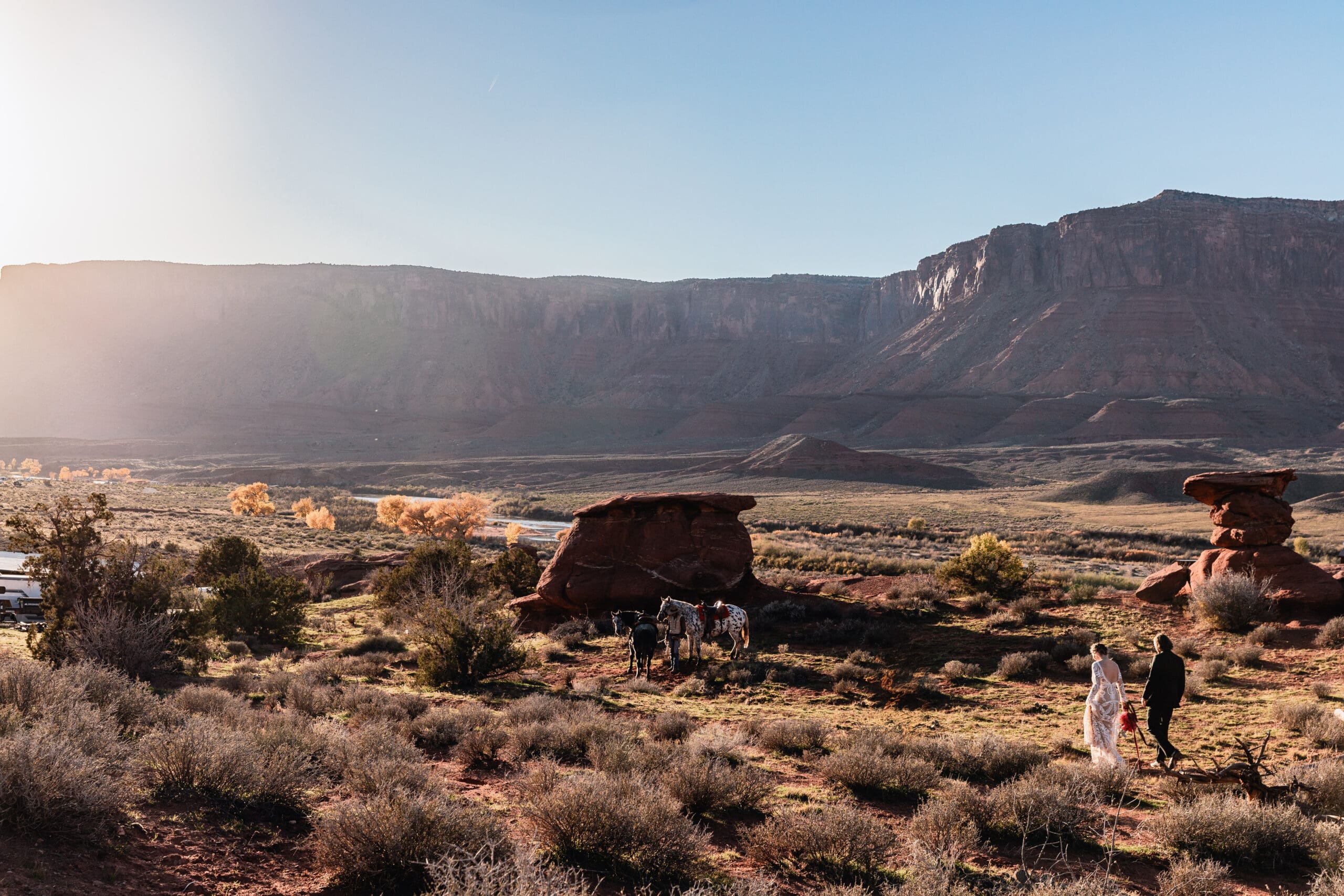
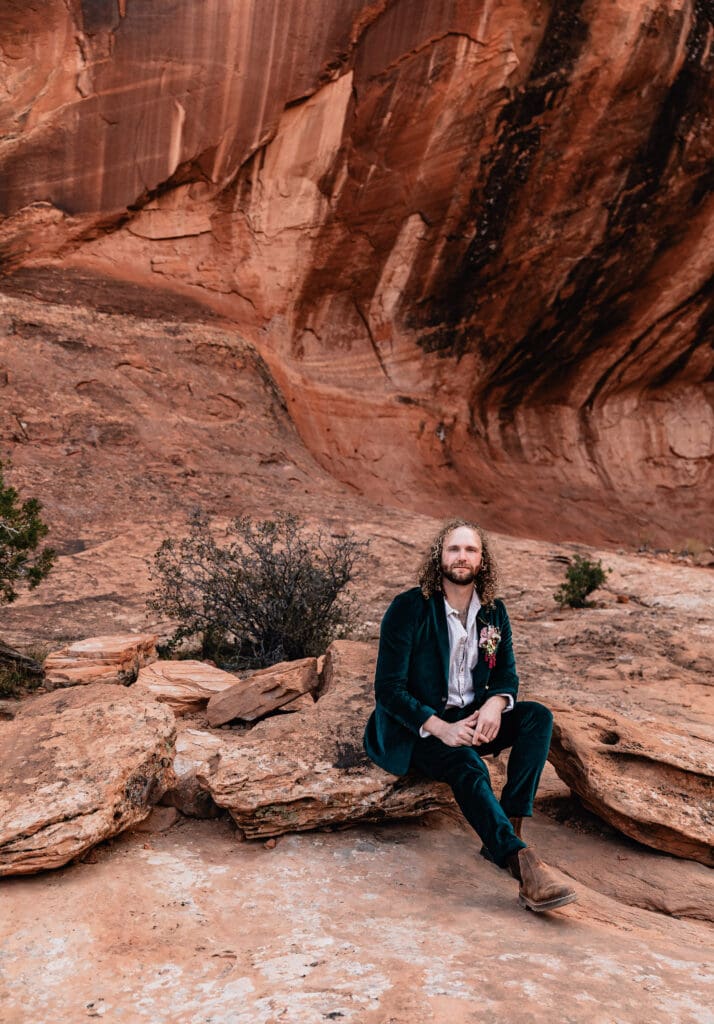
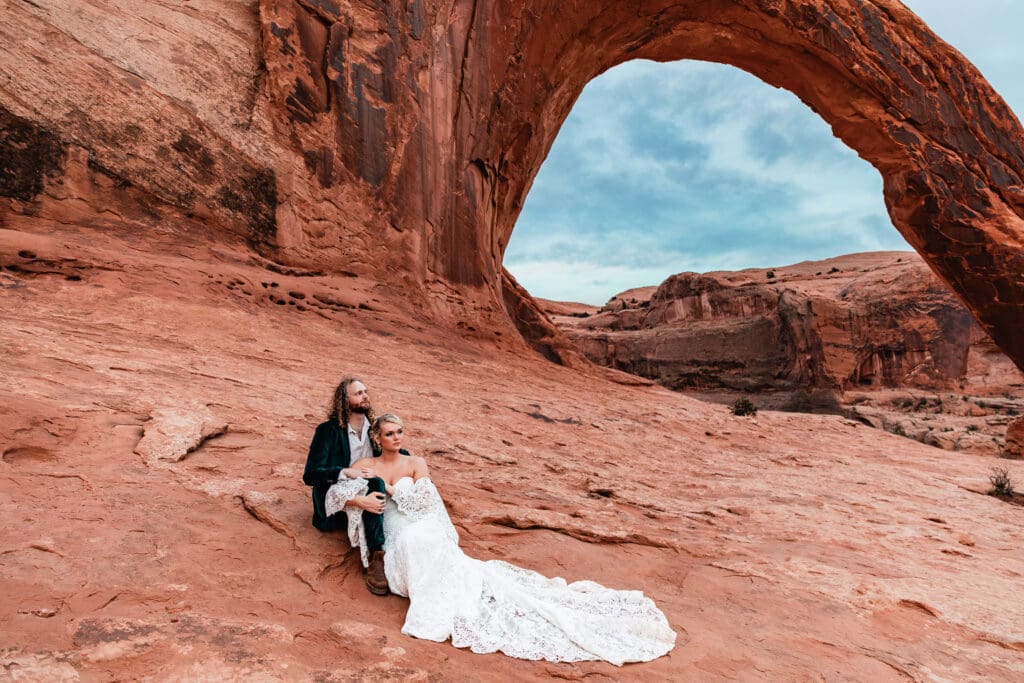
Elopements in places like Arches National Park, Canyonlands National Park, Zion National Park, and other spots tucked into Moab BLM Land, give you room to breathe, physically and emotionally.
They allow your wedding day to unfold instead of perform.
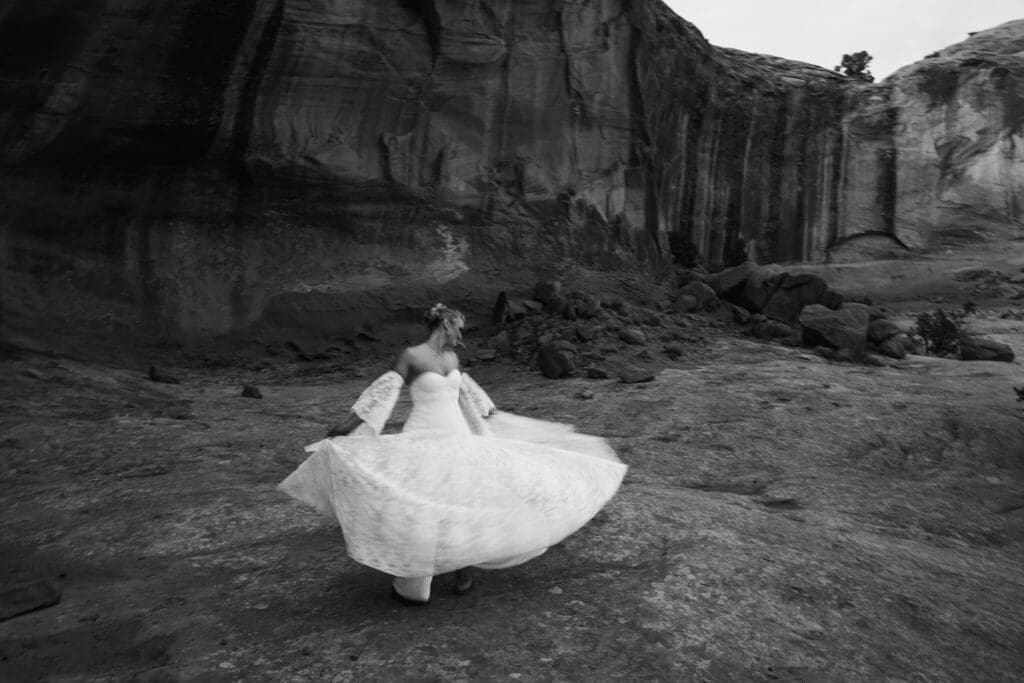
It can be multi-day. It can hold adrenaline and stillness in the same 24 hours. It can feel like the two of you living your real life, on vacation doing what you love only you are wearing a wedding dress(es) or suit(es)
The production shrinks.
The presence grows.
The meaning stays exactly where it belongs.
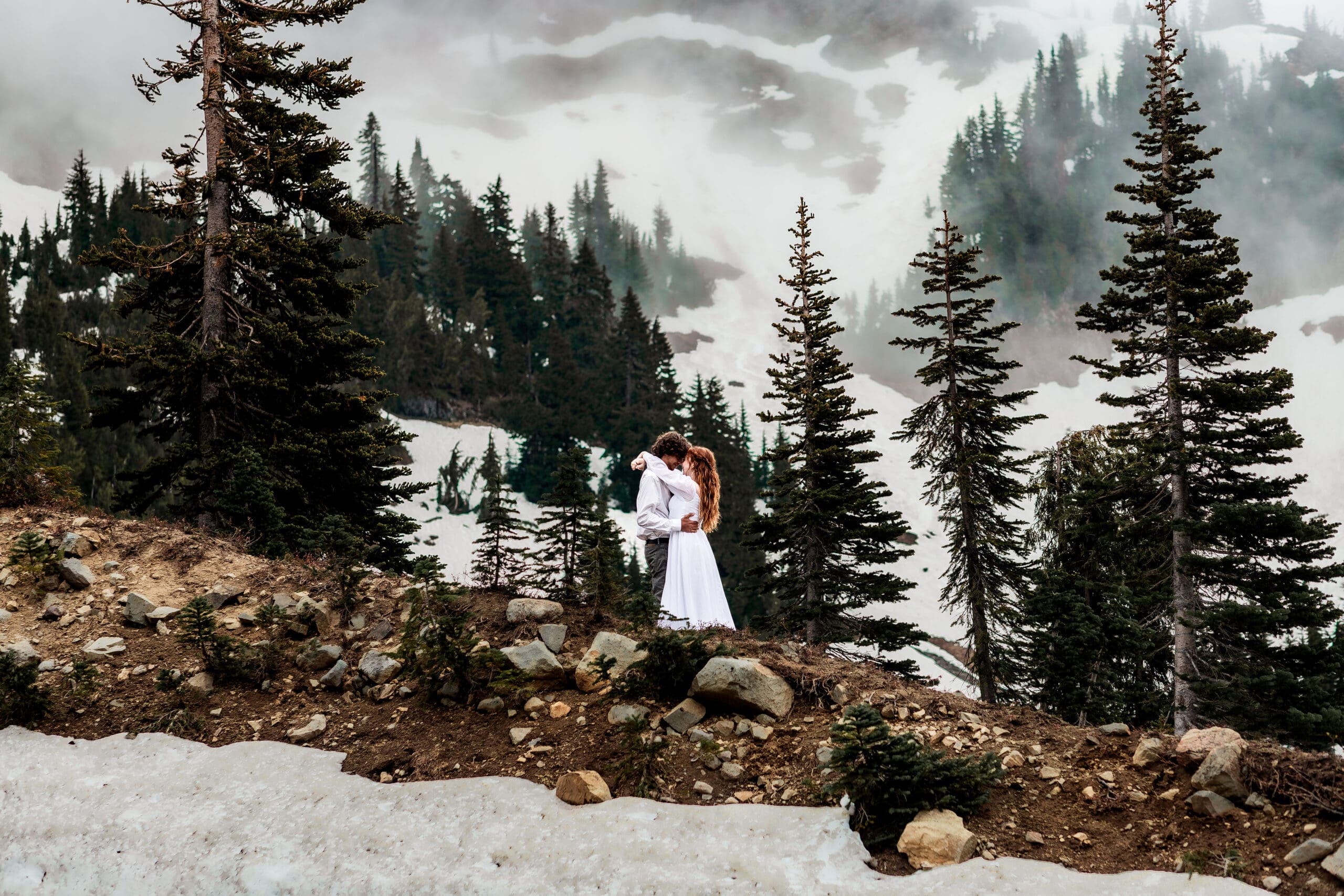
Why the Stigma Exists And Why It Isn’t Yours to Carry
For a long time, elopements had a reputation.
They were secretive. Rushed. Sometimes reactive.
Historically, “eloping” meant running off without telling anyone, often because families didn’t approve or circumstances felt urgent. That history lingers.
But that’s not what modern elopements look like. Couples are flipping the script and turning elopements into planned, meaningful wedding days in places that reflect who they are.
Today’s elopements are:
- Carefully planned
- Logistically supported
- Rooted in shared values
- Built around experience instead of expectation
So why does the stigma still exist?
Because weddings have traditionally been community-centered events. For generations, they weren’t just about two people. They were about families joining, social expectations, cultural traditions, and public celebration. A big wedding became the visible proof that something significant was happening.
When you choose a smaller, more intimate path, some people interpret that as rejection. Of tradition. Of family. Of “how it’s always been done.” And when people feel left out or surprised, it can come out as criticism.
That doesn’t mean your choice is wrong. It means your choice is different.
A ceremony with 150 guests isn’t automatically more meaningful than one with 8. A ballroom doesn’t make vows more binding than a quiet overlook in Grand Teton National Park or a cliffside ceremony in Zion National Park.
When someone questions your elopement, what they’re often reacting to isn’t your love — it’s the disruption of their expectations.
And that’s important.
Because expectations belong to the person holding them. Not to you.
You do not have to carry:
- Someone else’s idea of what a wedding “should” look like
- Someone else’s disappointment that it looks different
- Someone else’s fear of change
- Someone else’s attachment to tradition
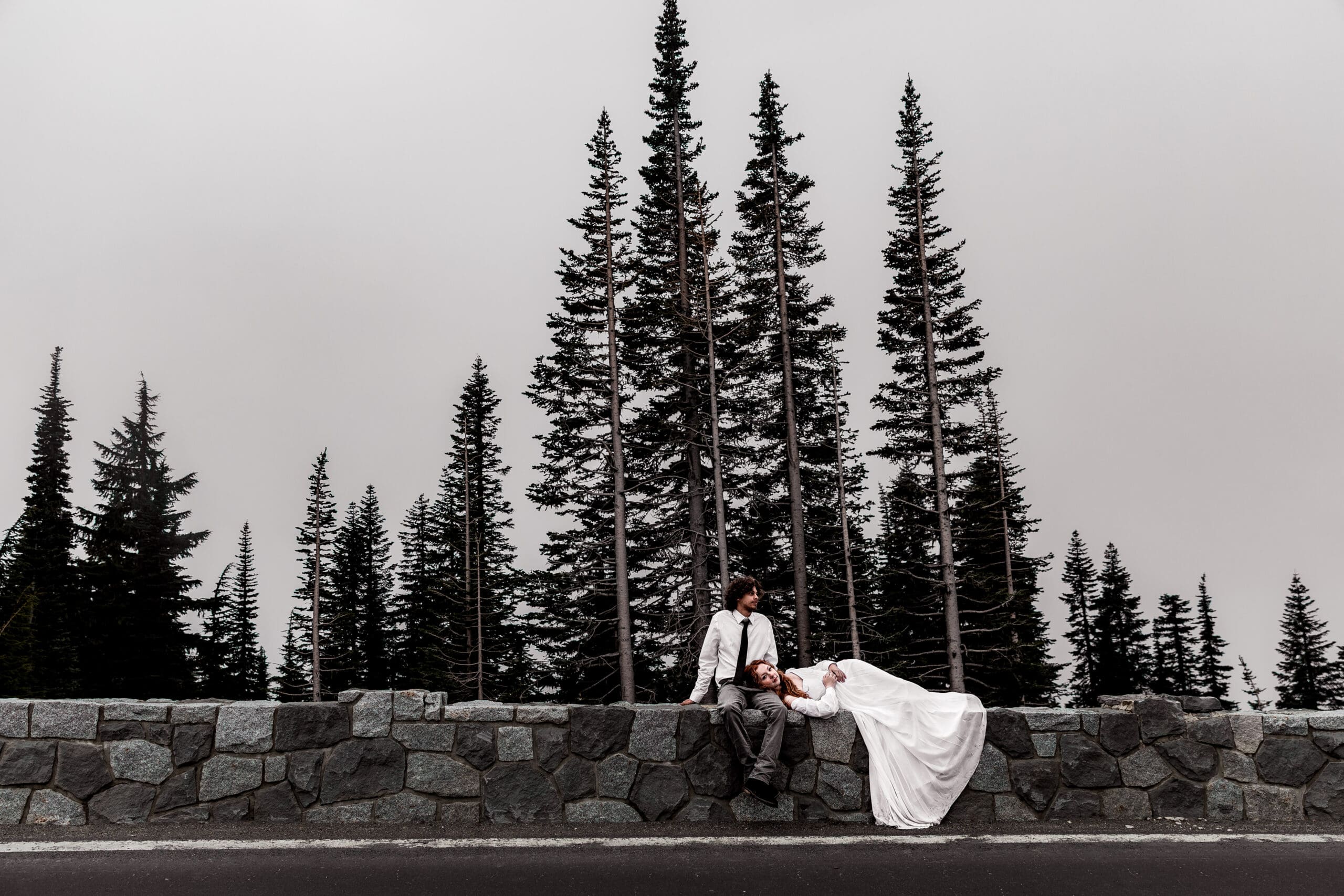
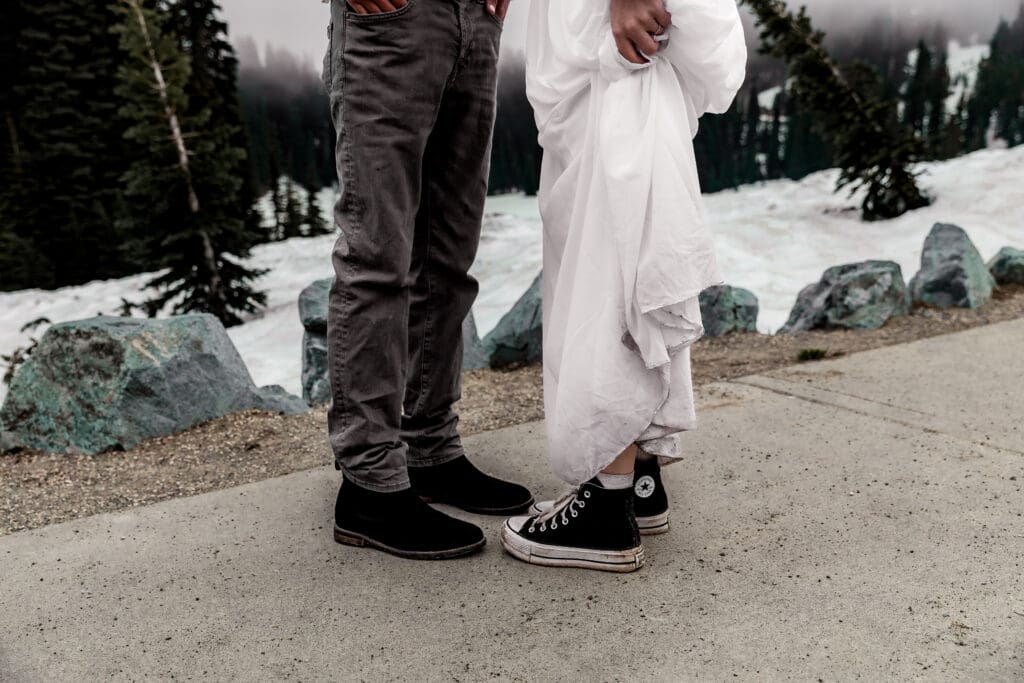
You are allowed to make a thoughtful, aligned decision about your own marriage. You are allowed to choose presence without apologizing for it. You are allowed to design a wedding day that reflects your relationship instead of rehearsing a script that doesn’t fit you.
That’s not selfish. It’s self-aware. And there’s a big difference.
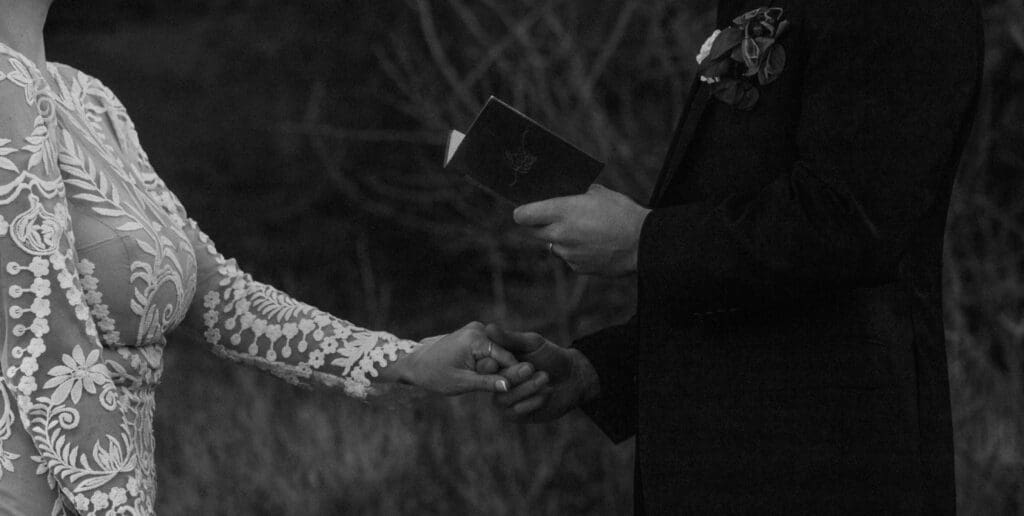
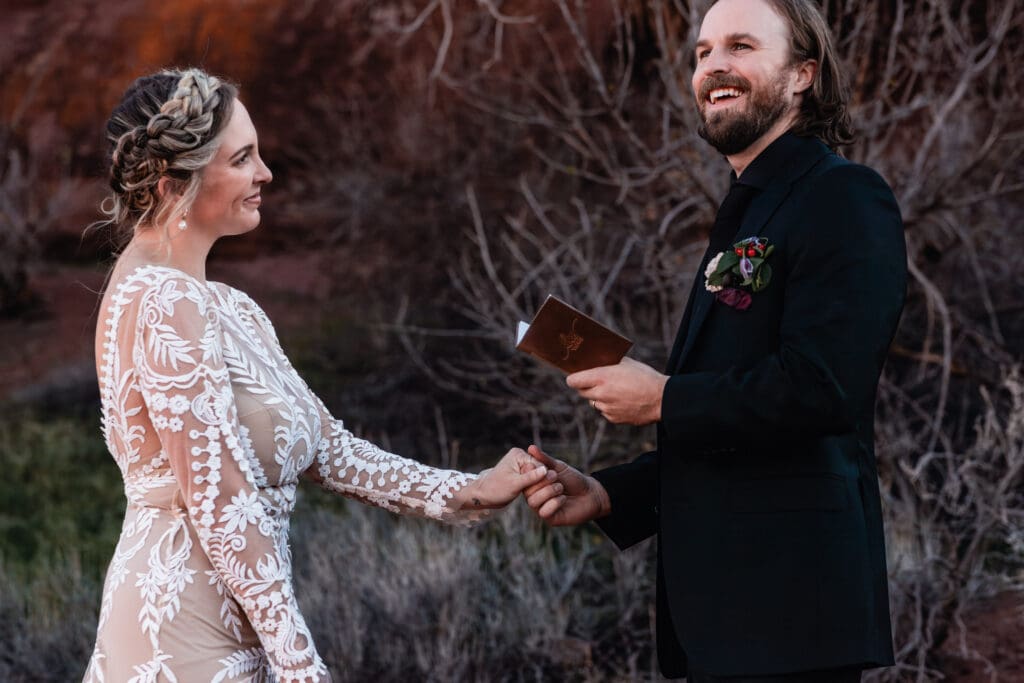
Navigating Family & Friends Without Losing Yourself
Even when you’re confident about your elopement, the questions and opinions from loved ones can sneak in and make you second-guess yourself:
- “So it’s just the two of you?”
- “What about us?”
- “Are you really skipping a big celebration?”
You can answer these questions without compromising your vision and without causing hurt feelings. It just takes a little preparation.
Here are some ways to handle common conversations:
1. Keep it honest and simple.
You don’t need a long explanation. Something like:
“We want our wedding day to reflect us, and we’re designing it to truly honor our relationship. We’d love to celebrate with you in other ways before or after.”
2. Offer alternatives to participation.
If family wants to be involved, consider:
- Letters or notes they can write for you to read privately
- Video messages or recordings you can watch together
- Including meaningful heirlooms or small gestures that honor them
- Inviting a few loved ones to join a portion of the day like a toast, hike, or private dinner
3. Set boundaries with care.
You can validate their feelings while staying firm:
“We love that you care so much. We also want to make choices that feel true to us on our wedding day.”
4. Emphasize intention, not logistics.
Sometimes people focus on what they think is missing. You can redirect gently:
“Our priority is having a day that feels meaningful and present for us. That’s what matters most.”
5. Give space for celebration later.
Planning a small party, brunch, or backyard celebration after the elopement can help loved ones feel included without compromising the intimacy of your day.
The goal is balance: you get the wedding day you want, and your loved ones still feel acknowledged. You’re not shutting anyone out. You’re creating space to show love in ways that work for you and them.
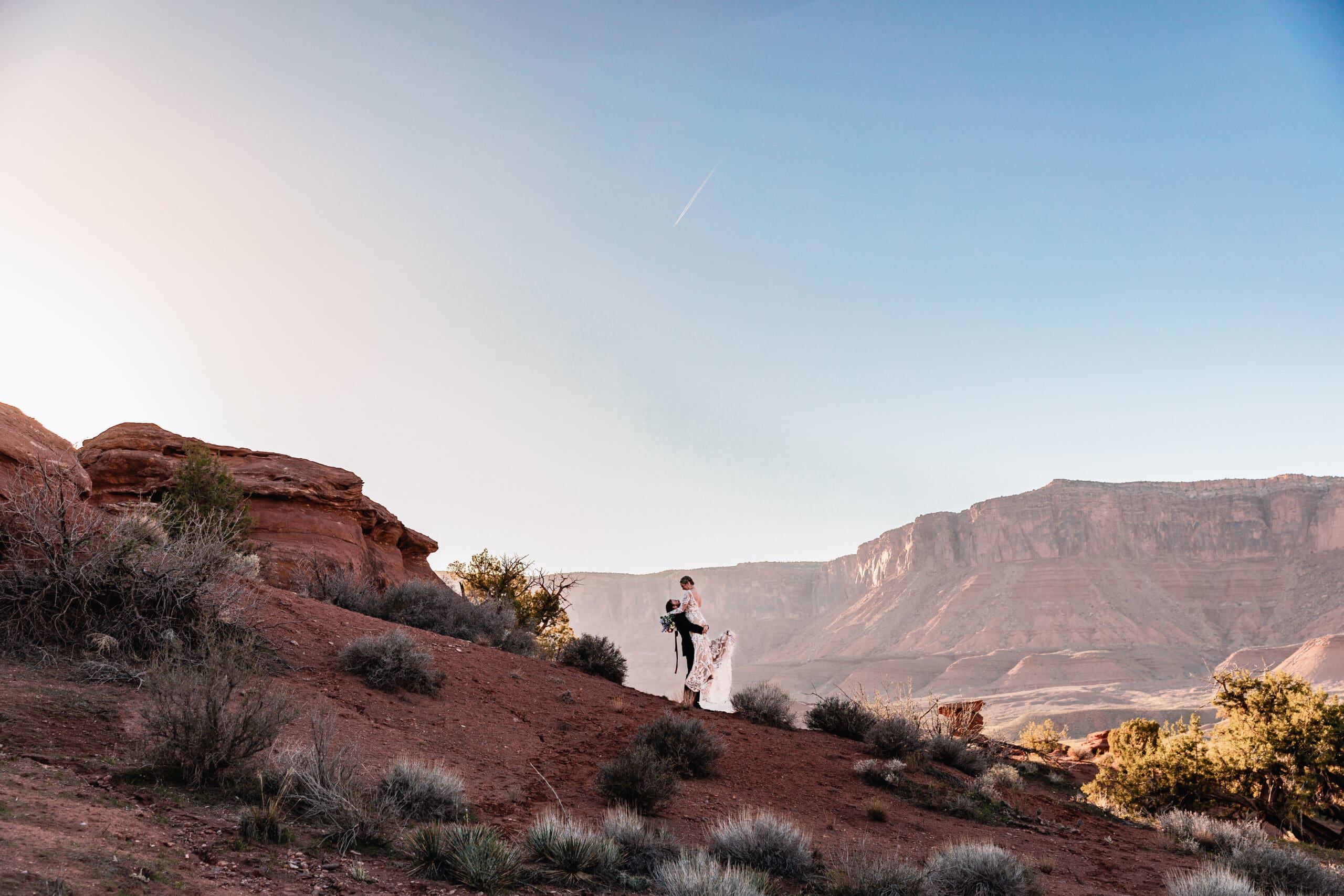
Let’s Quiet the Noise
If you’re choosing an elopement because you crave connection more than production. Because the idea of actually breathing on your wedding day sounds better than managing timelines and seating charts. Because you want your wedding to reflect your real relationship, I want you to know something:
You are not choosing less.
Eloping doesn’t make your wedding insignificant. It makes it meaningful. It makes it honest. It makes it yours.
A wedding designed for you will always feel different than a wedding designed around everyone else. And different doesn’t mean selfish. It doesn’t mean cheap. It doesn’t mean you’re leaving people behind.
It means you’re starting your marriage the way you intend to live it: thoughtfully, authentically, and in alignment with who you are.
And if you’re feeling the weight of outside opinions while trying to plan something that feels true to you, you don’t have to navigate that alone. This is part of the process that I will walk with you and sit with you if that is what you need.
If you’re dreaming about an elopement in Utah, Wyoming, or somewhere that feels like freedom to you, reach out. Let’s talk through what this could actually look like, logistically, emotionally, realistically, and build a day that feels steady and grounded instead of overwhelming.
You deserve a wedding day that feels like coming home to each other. And I’ll have your back while you build it.


